Science tells us that pink is a biological hallucination—a clever trick of the mind trying to bridge the gap between red and violet wavelengths. But to the human eye, pink is far more than a technicality; it is a disruptor. It is the “margarita in December” that cuts through the gray of a Vancouver autumn, the clinical hush of a psychological sedative, and the fragile peace found in a dew-covered petal. In this installment of my color series, we dive into the Pink Paradox: a hue that somehow manages to shout and whisper at the exact same time.
We like to think of color as a constant—a literal part of the scenery. But pink is different. Pink is a rebel.
In the world of physics, pink doesn’t actually exist on the light spectrum. There is no “pink wavelength.” Our brains essentially invent the color by blending red and violet light to bridge a gap that shouldn’t be there. It is a biological hallucination—a beautiful trick of human perception.
Perhaps that’s why pink feels so evocative. It doesn’t just sit there; it transports us.
The “Autumn Margarita” Effect
I recently found myself walking through a rare, bright Vancouver autumn day. In a city often defined by its fifty shades of gray, I stumbled upon a wall that demanded to be seen: a vibrant, architectural pink set against a deep blue sky and a red stop sign.

Something about this specific shade triggered a memory of the old Paradise Grill in Victoria, BC, circa 1990. Stepping into that restaurant felt like a brief escape to Florida or California. It was a “margarita in December” kind of pink—a color that disrupts the environment and forces a change in mood. It conjures up images of pool parties and the wonderfully kitschy pop of plastic pink flamingos—the ultimate symbol of a refusal to take life too seriously.
“Pink—a color that disrupts the environment and forces a change in mood.”
But look closer at the photo of that wall. You’ll see the sharp, vein-like shadows of a tree. To me, these aren’t just shadows; they are nature reclaiming its voice in an industrial space. It’s a silent scream saying, “I’m still here!”
The Sedative in the Room
While the “THIS IS” building feels high-energy and disruptive, the history of pink has a much more clinical side.
In the late 1970s, researchers developed Baker-Miller Pink (also known as “Drunk Tank Pink”). They found that staring at this specific bubblegum shade could actually lower a person’s heart rate and reduce physical aggression. It was used in prison cells to pacify inmates—a “temporary sedative” in paint form.
It’s a fascinating psychological irony: the same color that can feel like a tropical vacation can also be used as a tool for behavioral control.
For a deeper dive into the Baker-Miller Study, see the video at the bottom of this page.
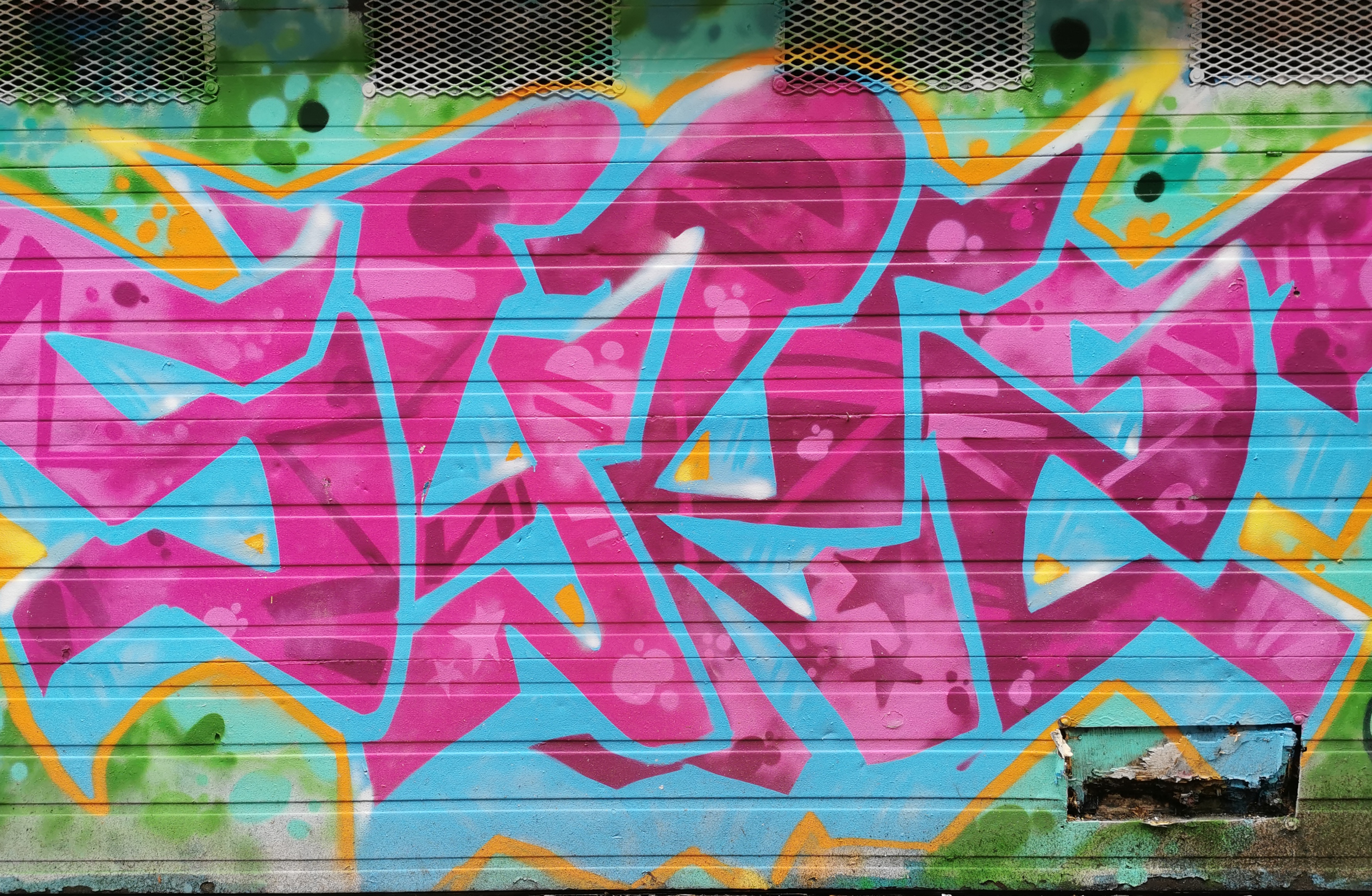
PINK POWER
Urban energy meets geometric precision. This mirrored graffiti piece transforms street art into a kaleidoscopic explosion of color and form.

A Study in Tenderness
Away from the hard lines of architecture and the sterile walls of psychology, I find pink in its most honest form: the garden.


PRETTY IN PINK
Nature’s intricate architecture: the ruffled, multi-layered heart of a magenta peony in full bloom.
When I photograph macro shots of dew-covered roses or the intricate layers of a peony, the word that comes to mind is tenderness. If the urban pink is a shout, this is a whisper. It represents peace, elegance, and the incredible patience of nature. In these shots, pink isn’t an “optical illusion” or a “sedative.” It’s a testament to fragility and resilience.

Admiration and Sympathy: Lighter pink roses, such as pale or blush, represent gentleness, admiration, joy, and, in some contexts, sympathy.
The Pink Spectrum: A Graham Spence Creative Palette
To help you bring these moods into your own space or branding, I’ve curated a range of pinks inspired by my recent work.

Whether it’s the bold “Paradise Neon” that wakes you up or the “Petal Dew” that helps you breathe, pink is a tool we can use to shift our perspective. For the professionals scrolling through a sea of corporate blue and gray today, maybe a little pink is exactly what you need to reclaim your own voice.
Does pink feel like a “sedative” or a “shout” to you? Let’s discuss in the comments.


Leave a Reply